
Why Web3 Infrastructure Matters in 2026
We’re standing at a pivotal moment in tech history — one where the internet of the future isn’t built on centralized servers, but on distributed networks powered by blockchain technology. The idea of a decentralized internet was once a fringe aspiration; today, it’s becoming a reality. And Web3 infrastructure sits at the core.
This infrastructure — the protocol layers, decentralized networks, AI integration, tokenization models, and user‑owned services — is what will ultimately unlock a truly equitable, transparent, and open internet. This post breaks down 7 shocking trends that you can’t afford to ignore in 2026, explains how AI Web3 integration accelerates adoption, and highlights how future decentralized internet blockchain innovations are shaping the next era.
Before we dive in, here’s a clear roadmap of what’s to come:
- DePIN: Physical Infrastructure Goes Decentralized
- The Modular Blockchain Revolution
- AI + Web3: Intelligent Infrastructure Takes Off
- Tokenizing Real World Value
- Zero‑Knowledge and Privacy as a Norm
- Advanced Wallets & Self‑Custody
- Decentralized Social and Identity Systems
Let’s explore each trend in detail.
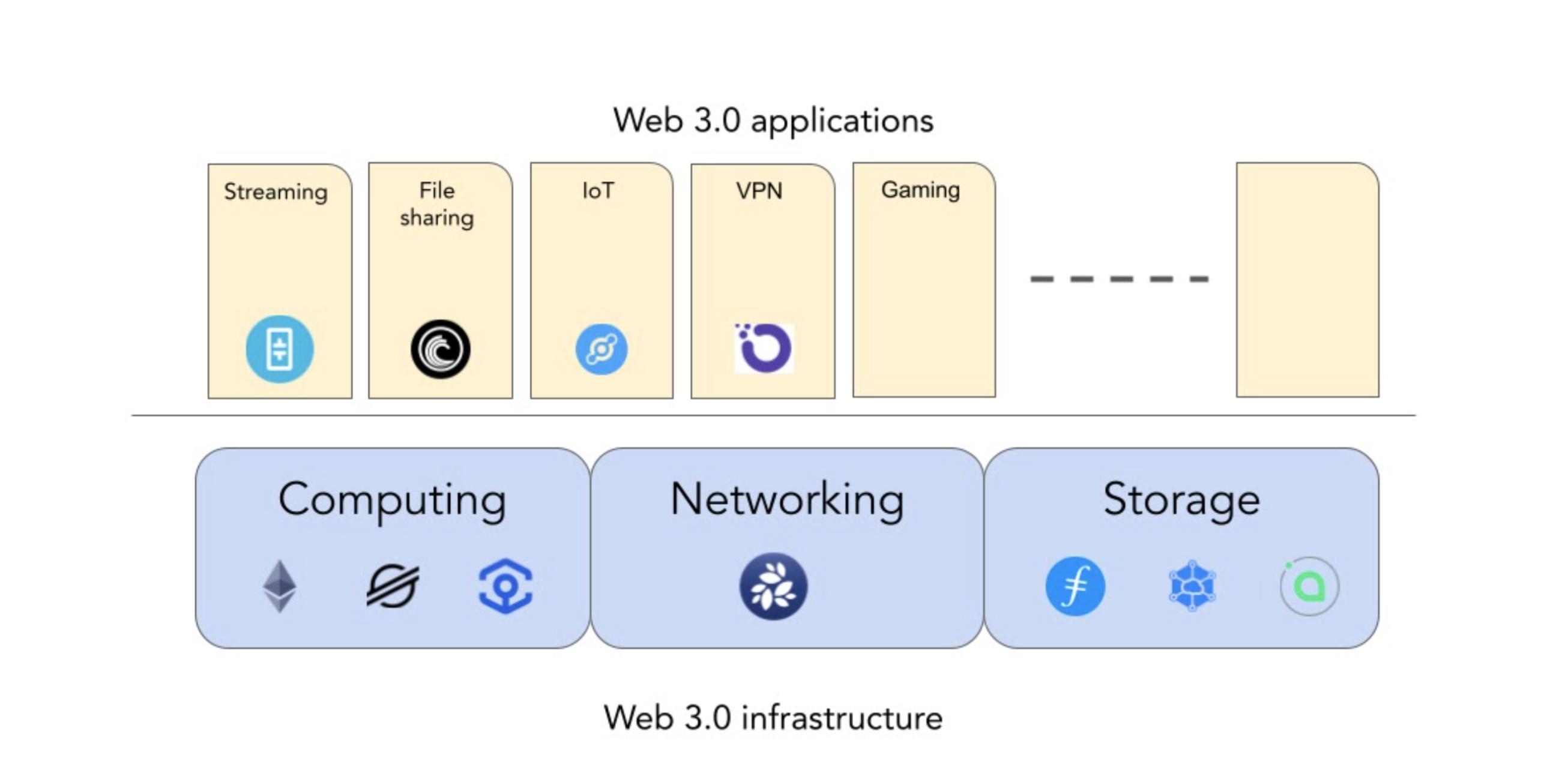
How DePIN is Transforming Web3 Infrastructure for the Decentralized Internet
One of the most shocking and transformative trends in Web3 infrastructure is the rise of Decentralized Physical Infrastructure Networks (DePIN). Traditionally, internet infrastructure has been heavily centralized, with major corporations controlling servers, network nodes, cloud computing, and storage solutions. This centralization has created bottlenecks, high costs, and control by a few entities, limiting innovation and user empowerment.
DePIN flips this model on its head by allowing communities, individuals, and decentralized organizations to participate in building, maintaining, and profiting from physical infrastructure — all coordinated through blockchain technology. This trend is not just a theoretical innovation; it’s actively reshaping how the decentralized internet operates.
What is DePIN?
At its core, DePIN is the decentralization of physical infrastructure through tokenized, blockchain-based incentives. Participants contribute resources — such as bandwidth, storage, computing power, or even IoT devices — to a network. In return, they are rewarded with tokens, creating a self-sustaining, user-owned ecosystem.
Key Features of DePIN:
- Community Ownership: Unlike traditional telecom or cloud infrastructure, no single entity controls the network. Ownership is distributed among participants.
- Incentivized Participation: Contributors earn tokens or digital assets based on their contributions, creating a tangible economic reward for real-world resources.
- Transparency: Every transaction, contribution, and reward is recorded on-chain, providing auditability and trust without intermediaries.
- Scalability: Token incentives encourage network expansion organically, allowing the infrastructure to grow faster than centrally managed systems.
Why DePIN is a Game-Changer
- Bridges the Gap Between Physical and Digital:
DePIN allows real-world resources to be leveraged for digital applications, enabling a stronger, decentralized foundation for AI-powered Web3 networks and dApps. - Reduces Centralized Dependence:
By distributing infrastructure ownership and control, DePIN reduces reliance on cloud giants like AWS or Google Cloud, mitigating risks like censorship, outages, or price manipulation. - Enables Localized Internet Access:
Communities in underserved regions can participate in and benefit from decentralized networks, helping democratize internet access globally. - Supports Emerging Use Cases:
From edge computing and IoT applications to data-heavy AI inference models, DePIN provides the backbone for advanced decentralized services that were previously impractical due to infrastructure costs or limitations.
Real-World Examples of DePIN in Action
- Helium Network:
Helium allows participants to deploy IoT hotspots and earn HNT tokens. These hotspots provide long-range wireless coverage, creating a decentralized, community-owned wireless network. - Filecoin & Storj:
Participants contribute storage space to a global decentralized network and earn tokens in exchange. This reduces dependence on centralized cloud providers while enhancing privacy and resilience. - Energy and Sensor Networks:
Some blockchain initiatives reward participants for sharing renewable energy or sensor data, integrating environmental impact with economic incentives.
DePIN vs Traditional Infrastructure: A Comparison Table
| Feature | Traditional Infrastructure | DePIN Infrastructure |
|---|---|---|
| Ownership | Centralized corporations | Community participants |
| Incentives | Salaries, fees | Tokenized rewards |
| Transparency | Proprietary & opaque | Blockchain auditable |
| Scalability | Limited by centralized resources | Organic, token-driven growth |
| Cost | High setup and maintenance | Participants bear minimal costs |
How DePIN Accelerates Web3 Adoption
The integration of DePIN with AI Web3 networks and decentralized apps strengthens the entire ecosystem:
- Reliable Decentralized Hosting: dApps can operate without fear of centralized server outages.
- Data Availability: Blockchain verification ensures that contributed resources are used efficiently and verifiably.
- Enhanced Network Security: Distributed ownership reduces attack surfaces and single points of failure.
In essence, DePIN doesn’t just transform infrastructure — it fundamentally reshapes how users interact with, trust, and benefit from the decentralized internet.
By combining DePIN with AI Web3 integration, we’re entering a future where networks are self-sustaining, intelligent, and owned by the very participants who power them — a truly revolutionary step for Web3 infrastructure and the decentralized internet in 2026.

1. DePIN: Decentralized Physical Infrastructure Networks Take Center Stage
One of the most transformative Web3 infrastructure trends for decentralizing the internet is the rise of DePIN (Decentralized Physical Infrastructure Networks). While early Web3 was primarily about digital value, DePIN bridges that gap between virtual protocols and real‑world physical infrastructure.
In simple terms, DePIN allows users to build, operate, and profit from physical infrastructure — like storage, compute, connectivity, or energy — all coordinated via blockchain networks and token incentives.
Why DePIN is Shocking
- Community‑owned infrastructure: Instead of telecom giants owning networks, everyday participants can contribute and earn.
- Real economic value: These aren’t speculative tokens — contributors supply actual physical resources with verifiable utility.
- Mass adoption potential: Reduces dependency on centralized cloud providers and enables edge computing, AI inference, and next‑gen services.
| Feature | Traditional Infrastructure | DePIN Infrastructure |
|---|---|---|
| Ownership | Centralized corporations | Community participants |
| Incentives | Salaries, fees | Token rewards |
| Transparency | Proprietary systems | Blockchain auditable |
| Scalability | Expensive upgrades | Token‑incentivized growth |
| Control | Lock‑in / vendor dependence | Open and permissionless |
As 2026 progresses, DePIN becomes a core pillar of decentralized internet infrastructure, not just an experiment.
2. Modular Blockchain Architecture: The New Foundation
A key challenge for early blockchains was scalability — bottlenecks in throughput, speed, and cost made blockchain impractical for mainstream use. The solution? Modular blockchain architecture — one of the most exciting blockchain trends 2026.
Instead of having all blockchain functions (execution, consensus, and data availability) bundled in one layer, modular networks separate these functions, allowing each to scale independently.
What Modular Architecture Means
- Specialized layers — dedicated layers for execution, data availability, and validation.
- Improved performance — less congestion and more efficiency.
- Easier upgrades — developers can implement changes without complete network forks.
This architecture enables more scalable Web3 infrastructure for decentralized internet projects, opening doors to complex dApps, high‑volume transactions, and interoperability. Public networks like Arbitrum, Optimism, and Celestia are examples of this movement gaining traction.
3. AI + Web3 Integration: A New Era of Intelligent Decentralized Internet
None of the infrastructure shifts mentioned above matter as much as how AI is being integrated into Web3 — something that is accelerating faster than many expect. Early Web3 focused on decentralized financial value and ownership. Today, the trend is shifting toward intelligence and automation infused directly into decentralized systems.
Understanding AI Web3 Integration
At a high level, AI Web3 integration means:
- AI agents operating on decentralized networks
- Smart contracts enhanced with adaptive logic
- AI‑powered Web3 networks and decentralized apps
- Automated, context‑aware execution without centralized control
This trend is one of the most impactful because it essentially makes the decentralized internet reactive, predictive, and autonomous.
How AI Integration Accelerates Web3 Adoption
Here’s what AI does for Web3:
✔ Smarter decision‑making in decentralized apps
✔ Personalized user experiences without sacrificing privacy
✔ Data optimization for transactions, liquidity, and governance
✔ Automated DAO participation and funding proposals
AI transforms Web3 from static protocols into living, adaptive networks — and that’s a big part of why adoption keeps accelerating.
4. Real World Value Tokenization: Beyond Digital Assets
Early crypto was dominated by volatile tokens with speculative value. Today, infrastructure shifts are pushing blockchain toward real‑world asset tokenization — converting physical assets like real estate, commodities, and even carbon credits into tradable tokens.
Why This Matters
- Bridges traditional finance and Web3
- Improves liquidity and access to markets
- Boosts institutional participation
This trend lays another crucial layer in Web3 infrastructure trends for decentralized internet — one where the blockchain economy interfaces with the real economy in meaningful ways.
5. Zero‑Knowledge & Privacy Technologies
Privacy is becoming a default expectation, not a luxury — especially for the future of decentralized internet blockchain innovations. Zero‑knowledge (ZK) technology is a key part of this shift.
What Are Zero‑Knowledge Technologies?
ZK proofs allow systems to verify truths without revealing underlying data, a breakthrough for secure and private computation.
Examples include:
- ZK rollups for scalable transactions
- zkML (Zero‑Knowledge Machine Learning)
- Private identity verification
These technologies drive scalability, cost‑efficiency, and user trust — all essential for real‑world Web3 adoption.
6. Advanced Wallets & Self‑Custody UX
For mainstream adoption, Web3 needs to be accessible — and advanced wallet infrastructure plays a central role. Innovations like account abstraction simplify how users interact with on‑chain systems by reducing complexity and improving security.
Users no longer need deep technical knowledge to manage assets. Instead, wallets handle:
- Batch transactions
- Social recovery mechanisms
- Multi‑signature approvals
This makes web3 infrastructure trends more approachable and less intimidating for everyday users.
7. Decentralized Social and Identity Systems
Another underappreciated trend is decentralized social platforms (DeSoc) and self‑sovereign identity. Instead of centralized social networks controlling data, decentralized systems allow users to own their online presence and reputation.
Namespaces like .brave, projects bridging Web3 domains with Web2 browsers, and on‑chain identity standards are all pieces of this emerging puzzle.
AI + Web3 Integration: Unlocking Intelligent Decentralized Networks
One of the most exciting and transformative trends in Web3 infrastructure for the decentralized internet in 2026 is the integration of Artificial Intelligence (AI) with Web3 networks. While blockchain and decentralized technologies initially focused on ownership, transparency, and value exchange, the addition of AI brings intelligence, automation, and adaptive functionality to these networks — creating a new era of smart, self-optimizing decentralized systems.
This is not just hype. AI Web3 integration is actively shaping the way decentralized applications (dApps) function, how resources are allocated, and how users interact with blockchain networks.
What is AI Web3 Integration?
AI Web3 integration refers to the use of artificial intelligence tools and algorithms within decentralized networks to improve decision-making, optimize processes, and enhance user experiences. It involves embedding AI models directly into blockchain applications or using decentralized networks to host and train AI systems.
Key components include:
- AI-Powered Smart Contracts: Smart contracts that can adapt dynamically based on real-world data inputs, predictions, or user behavior.
- Autonomous Agents: AI bots that perform tasks across decentralized networks, such as portfolio management, governance decisions, or data validation.
- AI-Powered dApps: Applications that use AI for personalized experiences, recommendation engines, or predictive analytics while maintaining decentralization.
- Data Optimization: AI helps process and interpret the massive datasets that decentralized networks generate, improving scalability and efficiency.
Why AI + Web3 Integration is Shocking
The integration of AI into decentralized networks introduces several game-changing benefits that traditional Web3 systems cannot achieve alone:
- Autonomous Decision-Making:
AI agents can execute decisions on-chain without human intervention, such as automatically reallocating liquidity in DeFi protocols or optimizing network bandwidth in DePIN setups. - Enhanced Security and Fraud Detection:
AI models can detect suspicious behavior across the network and respond in real-time, reducing the risk of hacks, exploits, or malicious activity. - Personalized Experiences Without Compromising Privacy:
Unlike centralized platforms that sell user data, AI in decentralized systems can provide tailored experiences without storing sensitive data centrally, leveraging privacy-preserving methods like federated learning. - Scalable Governance:
Decentralized Autonomous Organizations (DAOs) can use AI to analyze proposals, predict outcomes, and optimize voting mechanisms — making governance more efficient and evidence-driven.
How AI Integration Accelerates Web3 Adoption
The question often asked is: Why does AI integration matter so much for adoption? The answer lies in user experience, network intelligence, and real-world utility:
- Simplifies Complexity: AI can abstract technical barriers, making decentralized apps easier for mainstream users to navigate.
- Automates Routine Tasks: Automated portfolio rebalancing, DAO voting, and resource allocation reduce the friction of participation.
- Optimizes Resources: AI ensures that network resources like storage, bandwidth, and compute are allocated efficiently, enhancing scalability.
- Predictive Insights: AI models can forecast network congestion, token demand, or user behavior, enabling proactive optimizations.
Real-World Applications of AI + Web3
- Autonomous Trading Bots in DeFi:
AI-powered bots can execute trades across multiple decentralized exchanges, adjusting strategies in real-time to optimize yields. - Predictive Maintenance for DePIN Networks:
In decentralized infrastructure setups, AI can predict equipment failures or bottlenecks, ensuring the network runs efficiently. - AI-Powered Decentralized Marketplaces:
NFT platforms and tokenized asset exchanges use AI to recommend investments, pricing strategies, and liquidity allocation. - Self-Learning Governance Systems:
DAOs leverage AI to analyze historical voting patterns, community sentiment, and project data, resulting in smarter, evidence-based decisions.
Table: Comparing Traditional Web3 vs AI-Enhanced Web3 Networks
| Feature | Traditional Web3 Networks | AI-Enhanced Web3 Networks |
|---|---|---|
| Decision Making | Manual or fixed smart contracts | Autonomous, adaptive smart contracts |
| Resource Optimization | Static allocation | Dynamic AI-driven optimization |
| User Experience | Basic interfaces, limited personalization | Personalized, intelligent, intuitive |
| Security | Reactive, relies on code audits | Proactive, AI-driven threat detection |
| Governance | Voting and proposals require human analysis | Predictive, evidence-based AI governance |
Future Implications
By integrating AI into decentralized networks, Web3 infrastructure is no longer just about ownership and tokenization — it becomes intelligent, self-regulating, and user-centric. This trend is critical to achieving mainstream adoption of the decentralized internet, as AI solves many of the friction points that have historically limited user engagement.
In fact, many industry analysts predict that AI-powered Web3 networks and decentralized apps will define the next wave of blockchain adoption, not just in finance, but across healthcare, supply chain, social networks, and beyond.
Modular Blockchains and Tokenization: The Future of Scalable Web3 Networks
As the decentralized internet continues to evolve, one of the most shocking trends in Web3 infrastructure is the rise of modular blockchain architectures combined with tokenization of real-world assets. Together, these developments are solving long-standing scalability issues while creating new opportunities for mainstream adoption of decentralized networks.
Traditional blockchain designs — where execution, consensus, and data availability happen on the same layer — faced bottlenecks. Networks struggled with high transaction fees, slow processing times, and limited interoperability. Modular blockchains solve these challenges by separating these functions into specialized layers, improving performance and flexibility.
What is a Modular Blockchain?
A modular blockchain separates the primary functions of a blockchain into independent layers:
- Execution Layer: Where transactions are processed and smart contracts run.
- Consensus Layer: Responsible for validating blocks and maintaining network integrity.
- Data Availability Layer: Ensures that data is accessible and verifiable by participants without overloading the network.
This architecture allows each layer to scale independently, reducing congestion and enabling complex decentralized applications to function efficiently.
Why Modular Blockchains are Game-Changing
Key Benefits:
- Improved Scalability: By isolating execution from consensus and data availability, networks can process more transactions simultaneously.
- Enhanced Security: Segregation of layers reduces attack surfaces, making the system more resilient.
- Greater Flexibility: Developers can upgrade individual layers without disrupting the entire network.
- Interoperability: Modular networks make it easier to connect different blockchains, creating a true multi-chain ecosystem.
Tokenization of Real-World Assets: Bridging Physical and Digital Economies
In parallel with modular architectures, tokenization is revolutionizing how we think about value on blockchain networks. Tokenization converts real-world assets like real estate, commodities, art, or even carbon credits into tradable digital tokens on the blockchain. This trend is a central part of Web3 infrastructure trends for decentralized internet.
Benefits of Tokenization:
- Liquidity: Assets that were previously illiquid (like real estate) can now be fractionalized and traded easily.
- Accessibility: Individuals worldwide can invest in assets they would not normally access.
- Transparency: Every token’s history and ownership is recorded on-chain, reducing fraud and increasing trust.
- Integration with DeFi: Tokenized assets can be used as collateral or liquidity in decentralized finance protocols.
How Modular Blockchains and Tokenization Work Together
Modular blockchains provide the scalable, flexible infrastructure needed to support tokenized assets at scale. For example:
- The execution layer handles tokenized asset transfers and smart contract logic.
- The data availability layer ensures all transactions are verifiable without overloading the network.
- AI Web3 integration can predict market demand, optimize trading, or automate collateral management, creating intelligent, responsive ecosystems.
This combination unlocks a new era of decentralized applications that are scalable, efficient, and economically viable.
Real-World Examples
- Celestia: A modular blockchain providing separate layers for execution and data availability, allowing other networks to scale without compromising security.
- RealT: Tokenizes real estate assets, allowing investors worldwide to own fractions of properties and receive rental income via blockchain.
- Arbitrum & Optimism: Layer-2 solutions using modular designs to scale Ethereum, reducing gas fees and improving transaction throughput.
Table: Modular Blockchain vs Traditional Blockchain
| Feature | Traditional Blockchain | Modular Blockchain |
|---|---|---|
| Scalability | Limited by monolithic architecture | Independent layers allow massive scaling |
| Upgrades | Hard forks often required | Layer-specific upgrades possible |
| Interoperability | Limited cross-chain communication | Easier multi-chain connectivity |
| Security | Single-layer vulnerabilities | Segregated layers reduce risk |
| Use Cases | Basic transactions and dApps | Tokenized assets, DeFi, AI-powered dApps |
Why This Trend Matters for 2026 and Beyond
The combination of modular blockchains and real-world asset tokenization is central to future decentralized internet blockchain innovations. These trends solve performance bottlenecks, expand economic opportunities, and enable sophisticated, AI-powered applications — all while keeping networks decentralized, secure, and accessible.
By understanding this trend, developers, investors, and enthusiasts can anticipate the next wave of blockchain adoption, positioning themselves at the forefront of Web3 infrastructure innovation in 2026 and beyond.
Conclusion: The Dawn of a Truly Intelligent and Decentralized Internet
The evolution of Web3 infrastructure is not just a technological upgrade — it is a paradigm shift redefining how the internet itself operates. From the rise of Decentralized Physical Infrastructure Networks (DePIN) to AI Web3 integration, the trends of 2026 are setting the stage for a future where the decentralized internet becomes intelligent, autonomous, and truly user-owned.
We’ve explored seven shocking trends that you can’t afford to ignore:
- DePIN networks empowering communities to build and maintain real-world infrastructure while earning economic rewards.
- Modular blockchains that solve scalability and interoperability challenges, enabling complex, high-throughput decentralized applications.
- AI-powered Web3 networks and decentralized apps, bringing autonomous decision-making, predictive analytics, and personalized experiences to the decentralized ecosystem.
- Tokenization of real-world assets, bridging the gap between physical economies and blockchain, unlocking liquidity, and global accessibility.
- Zero-Knowledge and privacy-enhancing technologies, ensuring user data remains secure while supporting transparency and trust in decentralized systems.
- Advanced wallet infrastructure and self-custody solutions, simplifying the user experience and making Web3 accessible to mainstream audiences.
- Decentralized social platforms and identity systems, putting control of personal data and digital reputation back in the hands of users.
Together, these trends highlight a critical truth: the future of decentralized internet blockchain innovations is not speculative; it’s here, measurable, and accelerating rapidly. The integration of AI Web3 technologies ensures that these networks are adaptive, intelligent, and capable of self-optimization, overcoming many of the barriers that previously limited mainstream adoption.
As blockchain trends in 2026 continue to mature, we are witnessing a convergence of technology, economics, and human-centered design. Web3 infrastructure is no longer just about ownership of digital assets — it’s about creating ecosystems that are scalable, secure, and inclusive. Every developer, investor, and enthusiast engaging with these trends today is participating in shaping the decentralized internet of tomorrow.
Looking ahead, the combination of modular blockchains, AI-powered networks, and tokenized real-world assets will form the backbone of a new digital era. We can expect smarter, faster, and more equitable networks, where users are not just participants but owners and beneficiaries of the infrastructure itself. This is the promise of Web3: a world where the internet is decentralized, intelligent, and empowering for all.
The opportunities are immense, and the stakes are high. Understanding Web3 infrastructure trends for decentralized internet and how AI integration accelerates Web3 adoption is essential for anyone who wants to stay ahead of the curve. As we move deeper into 2026 and beyond, one thing is certain: the decentralized internet is no longer a distant vision — it is rapidly becoming our new reality, powered by innovative Web3 infrastructure and AI-driven intelligence.
For those who are ready to embrace this future, the time to learn, innovate, and participate is now. The future of decentralized internet blockchain innovations isn’t coming — it’s already here, and it promises to reshape the digital landscape in ways we are only beginning to imagine.
- To explore real-world applications of tokenization and blockchain-based real estate, you can check out how RealT allows investors to own fractional property on blockchain, demonstrating the practical impact of Web3 infrastructure trends for the decentralized internet.
- For insights into emerging decentralized physical infrastructure networks (DePIN) and AI-powered Web3 applications, read this detailed Medium article on the hottest Web3 trends of 2026 to understand how communities are building the next-generation decentralized internet.