
Why Emerging Market Stocks Are in the Spotlight
In early 2026, global investors were jolted — not by economic data or inflation readings, but by a geopolitical storm originating thousands of miles away. The intensifying Iran‑Middle East conflict has not only captured headlines but sparked a wave of risk‑off sentiment that’s rippling through financial markets everywhere.
From dramatic oil price surges to precipitous drops in indexes and capital fleeing risk assets, emerging market stocks — once shining beacons for growth — now find themselves on shaky ground. This isn’t hypothetical — fund flows are slowing, volatility is spiking, and investors are reconsidering where they park their money.
In this in‑depth blog post, we’ll break down 8 shocking ways this conflict is reshaping markets — with an eye on both macro‑economics and investment strategy.
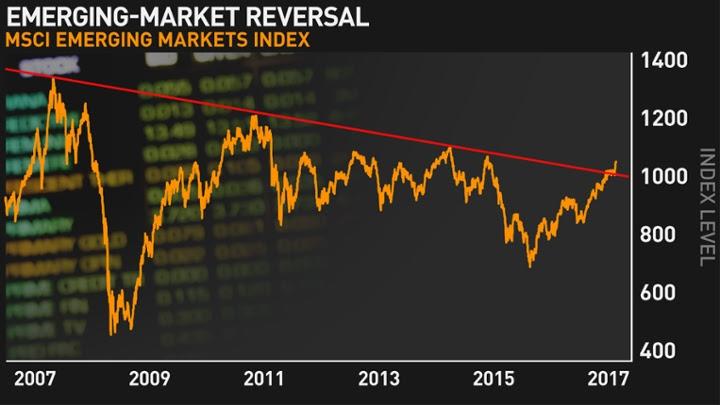
How Geopolitical Market Risk Is Shaping Emerging Market Equity Fund Flows
When discussing emerging market stocks in 2026, it’s impossible to ignore the profound influence of geopolitical market risk. The ongoing Iran‑Middle East conflict has not only spooked global investors but triggered tangible capital movements that are reshaping fund flows in emerging economies.
1. Understanding Geopolitical Market Risk
Geopolitical market risk refers to the potential financial market impact caused by political instability, conflicts, or other international events. In practical terms:
- Investors react to uncertainty by reallocating funds toward safer assets.
- Countries perceived as more vulnerable, often emerging markets, experience sharper capital outflows.
- Risk premiums rise, making equity valuations more volatile.
For example, as tensions escalated near the Strait of Hormuz, investors anticipated supply disruptions that could affect oil prices. This anticipation directly impacted emerging market equity funds, particularly in oil-importing countries.
2. Capital Flight and Its Effects on Emerging Market Stocks
Capital outflows from emerging markets are one of the clearest indicators of risk-off behavior. Here’s what typically happens:
- Institutional funds reduce exposure to high-volatility equities.
- Retail investors, influenced by news of conflicts and oil surges, withdraw investments.
- Exchange-traded funds (ETFs) tracking emerging markets experience sudden declines in net asset value (NAV).
Example:
A mid-March 2026 report indicated that emerging market equity funds saw a weekly outflow exceeding $3 billion amid escalating tensions in Iran, highlighting investor caution.
3. How Fund Managers Respond
Fund managers react to geopolitical shocks with strategic reallocations:
- Diversifying into developed markets: Reducing exposure to EM equities and increasing holdings in U.S. or European markets.
- Increasing liquidity: Holding more cash to quickly adjust to market swings.
- Hedging risk: Using options, futures, or currency hedges to offset potential losses in volatile EM positions.
These strategies, while protective, often amplify downward pressure on emerging market stocks, creating a feedback loop where investor caution fuels further selloffs.
4. Long-Term Implications for Emerging Market Equity Funds
While short-term outflows are evident, the long-term effect of geopolitical market risk depends on several factors:
- Duration of the conflict: Prolonged instability increases persistent outflows.
- Policy responses: Governments may adjust interest rates or introduce capital controls.
- Investor sentiment recovery: Markets often rebound once uncertainty subsides, but confidence restoration can take months.
Understanding these dynamics helps investors assess fund stability, evaluate risk-adjusted returns, and make informed decisions even amid oil price surges and global market selloffs.
5. Key Takeaways
- Geopolitical risk directly influences fund flows: Heightened uncertainty accelerates outflows from emerging market stocks.
- Investor behavior drives market volatility: Fund reallocations amplify short-term selloffs.
- Strategic positioning is crucial: Risk‑off strategies can protect portfolios but may further depress EM equities temporarily.
By closely monitoring geopolitical developments, understanding risk-on vs risk-off cycles, and observing capital flow trends, investors can better navigate the turbulent waters of emerging markets during the 2026 geopolitical crises.
What’s Driving This Turmoil?
Before diving into the eight specific mechanisms, it’s essential to frame the backdrop:
1. Iran’s Strategic Position in Oil Exports
Iran sits beside the Strait of Hormuz, through which roughly 20% of global oil and gas passes. Disruptions here — from attacks, blockades, or insurance evacuations — immediately push oil prices higher.
2. Risk‑Off Sentiment Spreads Fast
Geopolitical uncertainty acts like a market shock, pushing investors into safe havens like U.S. Treasuries or gold, while selling risk assets like emerging market stocks.
3. Oil Prices Are Surging
Oil — already sensitive amid geopolitical news — has climbed aggressively as nervous traders price in supply disruption risk.
Now — let’s explore the eight surprising channels through which all of this is hitting emerging markets.
1. The Direct Link: Oil Price Surge Hits Growth Expectations
The most obvious conduit is energy:
- Higher oil prices raise production and transport costs everywhere.
- For oil‑importing emerging economies, that means slower growth, higher inflation, or both.
- Even countries with strong growth stats — like Vietnam, Indonesia, and Thailand — see their external balances strained.
This creates an environment where equities are reassessed — not just in the short term, but in long‑term growth forecasts.
2. Emerging Market Capital Outflows — Funds Pull Back Fast
Data from recent weekly flows shows emerging market equity funds sliding and fund inflows dropping to multi‑week lows amid heightened conflict risk.
Simply put:
- Investors are reducing risk exposure.
- Funds shy away from markets seen as vulnerable to inflation shocks and FX volatility.
- Money moves into safer assets.
This capital flight directly pressures emerging market stocks and local currencies — a double whammy.
3. Currencies Suffer First — Markets Follow
In many emerging economies, currencies weaken faster than stock markets fall:
- The imminent oil price surge increases import bills.
- Weakening currencies raise the cost of servicing foreign debt.
- Investors anticipate these macro pressures and sell ahead of full market declines.
This pre‑emptive selling amplifies volatility in markets like Pakistan, the Philippines, and South Korea.
4. Supply Chain Disruptions Raise Input Costs
The conflict hasn’t just disrupted oil — it’s affected global trade logistics.
Shipping delays, insurance pulls, and port closures mean:
- Higher transport costs for intermediate goods.
- Rising input prices for manufacturing.
- Export‑dependent markets face tightening margins.
When profit forecasts get trimmed because of these rising costs, stock prices typically follow.
5. Risk‑Off Investing Strategies Are Rewriting Portfolio Rules
In periods of heightened geopolitical tension, investors prioritize preservation over performance:
- Hedge funds increase hedges.
- Retail investors reduce risk positions.
- Institutions shift to safe‑haven assets.
This collective shift away from risk assets (like EM equities) reinforces the selloff, creating self‑fulfilling momentum.
6. Global Market Selloff — Not Just Emerging Markets
It’s not isolated:
- Major indexes across Europe, Asia, and the Americas have seen broad selloffs as investors repriced risk.
- Dow Jones, Nikkei, and the ASX have all reacted to a risk‑off environment.
This global sentiment amplifies local pressures — as capital flees “risky” markets together rather than individually.
7. Interest Rates and Inflation Watchdogs Hover
With oil prices surging:
- Inflation expectations rise.
- Central banks in both developed and developing markets hesitate to ease monetary policy.
- Higher local rates dampen investment sentiment.
Emerging markets, traditionally seen as benefitting from rate cuts, suddenly face a policy headwind instead of a tailwind.
8. Longer‑Term Structural Shifts — What Comes Next
Even if the Iran conflict de‑escalates, several structural shifts may linger:
- Energy sourcing diversification
- Reevaluated risk premiums on EM stocks
- Greater hedge allocations into commodities
- Reassessment of external debt vulnerability
These shifts could mean a longer‑lasting impact on capital allocation patterns well into 2027.

A Clear Comparison: Impact Channels at a Glance
| Factor | Emerging Market Impact | Investor Reaction |
|---|---|---|
| Oil Price Surge | Higher costs, inflation pressure | Sell risk assets, buy commodities |
| Capital Outflows | Demand drop for EM stocks | Risk‑off reallocations |
| Currency Weakness | Higher FX risk, current account hits | Reduced foreign investment |
| Supply Chain Disruptions | Rising production costs | Reassessment of growth forecasts |
| Global Selloff | Broad negative momentum | Increased safe‑haven flows |
| Monetary Policy Uncertainty | Higher borrowing costs | Reduced equity risk appetites |
| Geopolitical Risk Premium | Long‑term valuation adjustments | Sector rotation to defensive assets |
| Structural Investment Shifts | Strategic reallocations | Longer EM investment caution |
What This Means for Investors Today
So what should you take away if you’re invested in or watching emerging markets?
Do:
- Review your risk tolerance against volatility.
- Watch oil price drivers, especially supply choke points.
- Consider safe‑haven allocations if geopolitical risk persists.
Avoid:
- Overleveraging volatile EM positions.
- Short‑term speculation based solely on headlines — fundamentals can still recover.
- Ignoring inflation and FX risk when assessing balance sheets.
The Domino Effect: Oil Price Surges and Their Economic Impact on Emerging Markets in 2026‑27
The 2026 Iran conflict has sent oil prices surging to levels not seen in recent years, creating a cascading effect that ripples across emerging market stocks, trade balances, and corporate profitability. Understanding this “domino effect” is critical for investors and policymakers alike.
1. Why Oil Prices Matter for Emerging Markets
Oil is not just a commodity; it’s a macro-economic lever. Its price directly affects:
- Import costs: Many emerging economies rely on oil imports for energy and transportation. Higher prices increase production costs.
- Inflation: Rising oil costs feed into broader consumer prices, eroding purchasing power.
- Currency stability: Higher import bills can weaken local currencies, as more foreign exchange is needed for energy imports.
- Budgetary pressures: Oil-importing governments face higher subsidies or fiscal adjustments.
Example: Indonesia, a net oil importer, saw its import bills jump 15% within a month of oil surges, increasing strain on both public finances and corporate profitability.
2. Impact on Emerging Market Stocks
Rising oil prices trigger a multi-layered response in stock markets:
- Corporate Margins Shrink – Manufacturing, logistics, and transport-heavy sectors face higher operational costs.
- Investor Sentiment Drops – Equity funds, especially those tracking emerging market stocks, experience capital outflows.
- Sectoral Shifts – Energy-exporting EM countries may benefit, while importers see stock corrections.
Table: Sectoral Impact of Oil Price Surges in Emerging Markets (2026‑27)
| Sector | Impact | Investor Response |
|---|---|---|
| Energy Exporters | Profit margins increase | Buy or hold positions |
| Manufacturing / Transport | Rising costs, shrinking margins | Sell or hedge equities |
| Consumer Goods | Inflation erodes spending | Reallocate to safe-haven assets |
| Financials | FX volatility & inflation risk | Shift to stable debt instruments |
| Technology / Services | Moderate impact | Monitor for indirect cost pressures |
3. The Currency Channel
Oil price surges also impact exchange rates. Countries heavily dependent on imports often see:
- Currency depreciation: Local currency weakens as oil demand in USD rises.
- Inflation acceleration: Imported goods become more expensive.
- Equity pressure: Investors sell emerging market stocks to hedge currency risks.
Example: In early March 2026, the Turkish lira weakened 2% against the USD following oil supply anxieties, pressuring EM ETFs holding Turkish equities.
4. The Feedback Loop to Global Market Selloffs
Higher oil prices don’t just affect local markets—they contribute to global market selloffs:
- Investors globally reassess risk premiums.
- EM equities, perceived as more volatile, are sold first.
- Capital flows to safer assets like U.S. Treasuries or gold, reinforcing EM declines.
This feedback loop is particularly acute when geopolitical conflicts coincide with macroeconomic uncertainty, as we see in 2026.
5. Long-Term Implications for Emerging Market Economies (2026‑27)
Even if the conflict de-escalates, the oil shock leaves lasting effects:
- Structural energy adjustments: Countries accelerate alternative energy adoption or energy efficiency programs.
- Debt and fiscal management: Governments may adjust spending to absorb higher oil costs.
- Investor caution: Funds may maintain risk-off allocations for months, slowing EM recovery.
6. Key Takeaways
- Oil price surges act as a multiplier, affecting inflation, corporate margins, and investor sentiment.
- Emerging market stocks often bear the brunt due to exposure to import costs, currency risk, and fund outflows.
- Sectoral differentiation matters: Energy exporters may benefit, while importers see the most pressure.
- Long-term vigilance is needed: Investors should monitor oil prices, geopolitical developments, and macro indicators to navigate this volatile environment.

Risk‑Off Investing Strategies During Middle East Geopolitical Crises
Navigating emerging market stocks during turbulent geopolitical times requires more than luck — it requires strategy. The Iran conflict and resulting oil price surge in 2026 have intensified global market selloffs, leaving investors scrambling to protect their portfolios. This section explores actionable risk-off investing strategies that help mitigate losses and position for long-term gains.
1. Understanding Risk-Off Investing
Risk-off investing is a strategy where investors reduce exposure to high-volatility assets and increase holdings in safer investments during periods of uncertainty.
Key characteristics include:
- Prioritizing capital preservation over aggressive growth.
- Reallocating funds from emerging markets to safer assets like gold, government bonds, or defensive equities.
- Hedging against currency and commodity risks, especially during oil price shocks.
Example: After the escalation of the Iran conflict, several large funds reduced EM equity exposure by 10–15%, reallocating to U.S. Treasuries and gold ETFs.
2. Diversification Across Geographies and Sectors
One of the most effective strategies is diversification, which reduces portfolio vulnerability to geopolitical market risk.
How to diversify effectively:
- Geographic diversification: Avoid concentrating all investments in politically sensitive EM countries.
- Sector diversification: Favor sectors that are less oil-dependent or resilient to geopolitical shocks, such as technology, healthcare, and consumer staples.
- Asset class diversification: Combine equities with bonds, commodities, and alternative investments.
Table: Diversification Example for 2026 EM Portfolio
| Asset Class | Allocation % | Reason |
|---|---|---|
| Emerging Market Stocks | 40% | Exposure to growth but carefully selected |
| U.S./EU Bonds | 25% | Safety and stability |
| Gold & Commodities | 15% | Hedge against inflation and oil price shocks |
| Defensive ETFs | 10% | Consumer staples, utilities |
| Cash/Liquid Assets | 10% | Flexibility to deploy when opportunities arise |
3. Hedging Currency and Commodity Risks
With oil price surges and emerging market capital outflows due to oil price shock, currency and commodity risks increase significantly. Investors can mitigate this via:
- Currency hedges: Using futures or options to protect against depreciation of EM currencies.
- Commodity hedges: Investing in oil futures or ETFs to offset losses in oil-sensitive equities.
- Inverse ETFs: Consider instruments that move inversely to high-volatility EM indices to balance portfolios.
4. Defensive Stock Selection
Even within emerging market stocks, some equities outperform during crises:
- Consumer staples – Less sensitive to economic slowdown.
- Healthcare – Demand remains stable regardless of conflict.
- Energy exporters – Benefit from oil price surges, especially if they have robust governance and liquidity.
Tip: Avoid heavily leveraged companies that rely on imported oil or foreign debt, as they are most vulnerable to geopolitical shocks.
5. Monitoring Macro Indicators
Successful risk-off strategies rely on constant vigilance. Investors should track:
- Oil prices and volatility indices – Spikes often signal emerging market stress.
- Capital flow data – Sudden outflows indicate heightened risk perception.
- Currency movements – EM currency weakness often precedes equity declines.
- Central bank policy announcements – Interest rate changes can exacerbate risk-off sentiment.
6. Gradual Re-entry Strategy
After markets stabilize, a calculated re-entry into EM stocks can capture growth opportunities:
- Start with defensive sectors before expanding to cyclical stocks.
- Monitor geopolitical de-escalation signals.
- Incrementally increase exposure while maintaining hedge positions.
This ensures investors benefit from recovery without exposing themselves to repeat shocks.
7. Key Takeaways for Investors
- Risk-off investing protects capital: Especially during volatile periods caused by Middle East geopolitical crises.
- Diversification and hedging are essential: Across sectors, geographies, and asset classes.
- Macro-awareness is critical: Tracking oil prices, currency movements, and fund flows can prevent losses.
- Strategic patience pays off: Gradual re-entry and selective investment capture recovery while minimizing risk.

Authoritative Insight: Why the Emerging Market Stock Turbulence Isn’t Over Yet
Even as markets attempt to absorb the initial shocks from the 2026 Iran conflict, it is clear that the story for emerging market stocks is far from finished. Analysts and financial strategists across the globe are warning that the combination of heightened geopolitical market risk, surging oil prices, and rapid capital outflows from emerging market equity funds could create a prolonged period of volatility, with consequences that may reverberate well into 2027.
1. Geopolitical Risk Is Persistent and Unpredictable
Unlike standard market corrections driven by economic cycles, geopolitical shocks are inherently unpredictable. The Middle East conflict, centered on Iran, affects not only energy markets but also trade flows, regional stability, and investor sentiment worldwide. As a result:
- Emerging market economies that are highly dependent on oil imports face ongoing fiscal and inflationary pressures.
- Equity markets in Asia, Africa, and Latin America remain vulnerable to repeated waves of global market selloffs as investors react to news, rather than fundamentals.
- Investor confidence is fragile, meaning risk-off investing strategies during Middle East geopolitical crises will likely dominate portfolio decisions for months.
Example: Fund managers monitoring Middle East developments have already signaled that any additional escalation could trigger another round of withdrawals from emerging market stocks, even in countries that were previously considered relatively insulated.
2. Oil Price Surges and Inflation Risks Aren’t Temporary
The conflict has triggered a sharp oil price surge, which in turn amplifies inflationary pressures across emerging markets. For oil-importing economies, higher energy costs translate into:
- Rising production and logistics expenses are impacting corporate profitability and earnings forecasts.
- Weakened local currencies, which can exacerbate debt repayment challenges for companies and governments with foreign obligations.
- Increased volatility in emerging market stocks, as both domestic and foreign investors react to shifting risk-reward calculations.
Even if geopolitical tensions ease, the residual economic effects—ranging from higher inflation to tightened central bank policies—could continue to pressure emerging market equity funds well beyond the immediate crisis period.
3. Capital Flows May Remain Constrained
One of the most critical factors affecting emerging market stocks is the movement of money. When geopolitical uncertainty escalates:
- Institutional investors often reduce EM equity exposure to preserve capital.
- Retail investors tend to follow suit, exiting funds or selling individual equities out of fear.
- These capital outflows due to oil price shock and geopolitical risk reinforce downward pressure on stock prices, creating a cycle that may take months to reverse.
Even as markets stabilize temporarily, investors are likely to adopt a cautious stance, keeping some allocation in safe-haven assets such as gold, U.S. Treasuries, or defensive ETFs. This means that a full recovery in emerging market stocks may be slower and more uneven than historical corrections suggest.
4. Structural Market Shifts Are Emerging
Beyond immediate reactions, the Iran conflict is driving longer-term structural changes in how emerging markets are perceived:
- Reassessment of risk premiums: Investors are demanding higher returns for EM exposure due to persistent geopolitical volatility.
- Sector rotation: Funds are favoring energy exporters and defensive sectors over cyclical industries that are highly sensitive to oil and trade shocks.
- Portfolio rebalancing trends: Risk-off strategies have become a central feature, reshaping fund allocations and influencing emerging market capital outflows for the foreseeable future.
These shifts indicate that volatility isn’t just a temporary spike; it’s part of a broader reevaluation of emerging market stocks, their role in global portfolios, and the strategies needed to navigate them successfully.
5. The Bottom Line: Staying Prepared and Strategic
For investors, the message is clear: the situation is dynamic, and complacency is risky. Key takeaways include:
- Monitor geopolitical developments closely: News from Iran and the surrounding regions directly impacts oil prices, currency stability, and capital flows.
- Use risk-off investing strategies strategically: Diversification, hedging, and selective defensive positioning are essential in 2026’s volatile climate.
- Focus on fundamentals: Despite market turbulence, long-term growth potential remains in carefully selected emerging market stocks, particularly in sectors resilient to energy shocks and global market selloffs.
In short, while the initial shockwaves may appear to stabilize, the reality is that emerging market stocks will continue to feel the effects of the Iran conflict, oil price surges, and geopolitical market risk for the foreseeable future. Strategic, informed, and patient investors who understand these dynamics are the ones most likely to navigate the turbulence successfully and capitalize on opportunities when markets eventually normalize.
Conclusion: Navigating the Turbulent Waters of Emerging Market Stocks Amid Geopolitical Uncertainty
The 2026 Iran conflict has starkly highlighted how interconnected global markets are, and why emerging market stocks can no longer be analyzed in isolation from geopolitical developments. What started as a regional tension has quickly cascaded into a global market selloff, fueled by oil price surges, capital outflows, and shifting investor sentiment across the world. From the disruption of trade routes to the revaluation of currencies, the effects ripple far beyond the immediate conflict zones, demonstrating the profound influence of geopolitical market risk on investment portfolios.
For investors, this period is a critical reminder of the importance of risk-off investing strategies during Middle East geopolitical crises. Whether it’s diversifying across sectors and geographies, hedging currency and commodity risks, or selectively choosing defensive emerging market stocks, the lessons are clear: caution, strategy, and vigilance are paramount. The surge in oil prices, combined with rapidly changing macroeconomic conditions, underscores that emerging market capital outflows due to oil price shock are not just temporary disruptions but signals that require careful portfolio adjustments.
Moreover, the impact of Iran conflict on emerging market equity funds extends beyond immediate price movements. It influences investor confidence, triggers strategic reallocations, and forces fund managers to rethink allocations and exposure. For retail and institutional investors alike, understanding these dynamics can turn uncertainty into opportunity—by identifying sectors that benefit from elevated oil prices, monitoring macroeconomic indicators, and preparing for both short-term volatility and long-term structural shifts.
The reality is that volatility in emerging market stocks is not inherently negative; it is a reflection of risk premiums, changing capital flows, and shifting geopolitical realities. Those who approach this turbulence with foresight—leveraging risk-off strategies, staying informed about oil price trends, and anticipating the ripple effects of global crises—are positioned not only to protect their portfolios but also to identify growth opportunities that less-prepared investors may overlook.
In the coming months, careful observation of macroeconomic indicators, currency movements, oil price fluctuations, and global market selloffs will be crucial. Strategic investors will balance caution with calculated exposure, ensuring that they can navigate the turbulent waters of 2026 and beyond. By learning from the shocks caused by geopolitical instability, embracing disciplined investment strategies, and continuously assessing risk, investors can emerge not just unscathed but potentially stronger, capitalizing on market inefficiencies that often accompany periods of uncertainty.
Ultimately, the lesson is clear: emerging market stocks, while highly sensitive to geopolitical market risk, offer both peril and potential. By understanding the channels through which conflicts like the Iran crisis impact markets—through oil price surges, fund flows, currency volatility, and investor sentiment—investors can transform what seems like chaos into a strategic opportunity. Remaining informed, vigilant, and disciplined is the key to thriving in a world where geopolitical crises can shape markets overnight, and where long-term growth still exists for those who navigate the risks intelligently.
Recommended Further Reading
For a broader understanding of geopolitical risk and equity markets, this external article from Reuters on historical market reactions provides a valuable perspective on market stress responses over time:
https://www.reuters.com/business/finance/emerging-market-equity-funds-slide-iran-conflict-sparks-selloff‑2026‑03‑06/
For a deep dive into how financial markets and economies cope with oil market shocks, check this FT article:
https://www.ft.com/content/economic‑impact‑of‑global‑oil‑price‑shocks‑emerging‑markets