
The US unemployment rate 2026 story has taken an unexpected turn.
On the surface, the latest U.S. jobs report seems contradictory. The unemployment rate fell to 4.1% in July 2026, yet the economy lost 23,000 nonfarm payroll jobs during the month. At the same time, earlier employment figures were revised significantly lower, suggesting that the labor market may have been weaker than previously understood.
That combination raises a bigger question: What does the latest US unemployment rate mean for interest rates, Federal Reserve policy and the broader US economy?
The answer is more complicated than simply saying that falling unemployment is good or that job losses are bad.
The U.S. labor market is one of the most closely watched parts of the economy because employment affects household income, consumer spending, business confidence, inflation and economic growth. It also plays an important role in the Federal Reserve’s decisions about monetary policy.
The July 2026 report therefore deserves a closer look.
According to the U.S. Bureau of Labor Statistics, nonfarm payroll employment declined by 23,000 in July, while the unemployment rate edged down to 4.1%. The number of unemployed people was about 6.9 million. The labor-force participation rate was 61.4%, while the employment-population ratio stood at 58.9%.
At the same time, May payroll growth was revised from 129,000 to 63,000, while June’s gain was revised from 57,000 to just 20,000. Together, those revisions reduced previously reported employment gains for May and June by 103,000 jobs.
This is why the latest US unemployment rate 2026 report is about more than one month’s employment number.
It could influence expectations surrounding interest rates, Federal Reserve policy, consumer borrowing costs, business investment and the future direction of the US economy
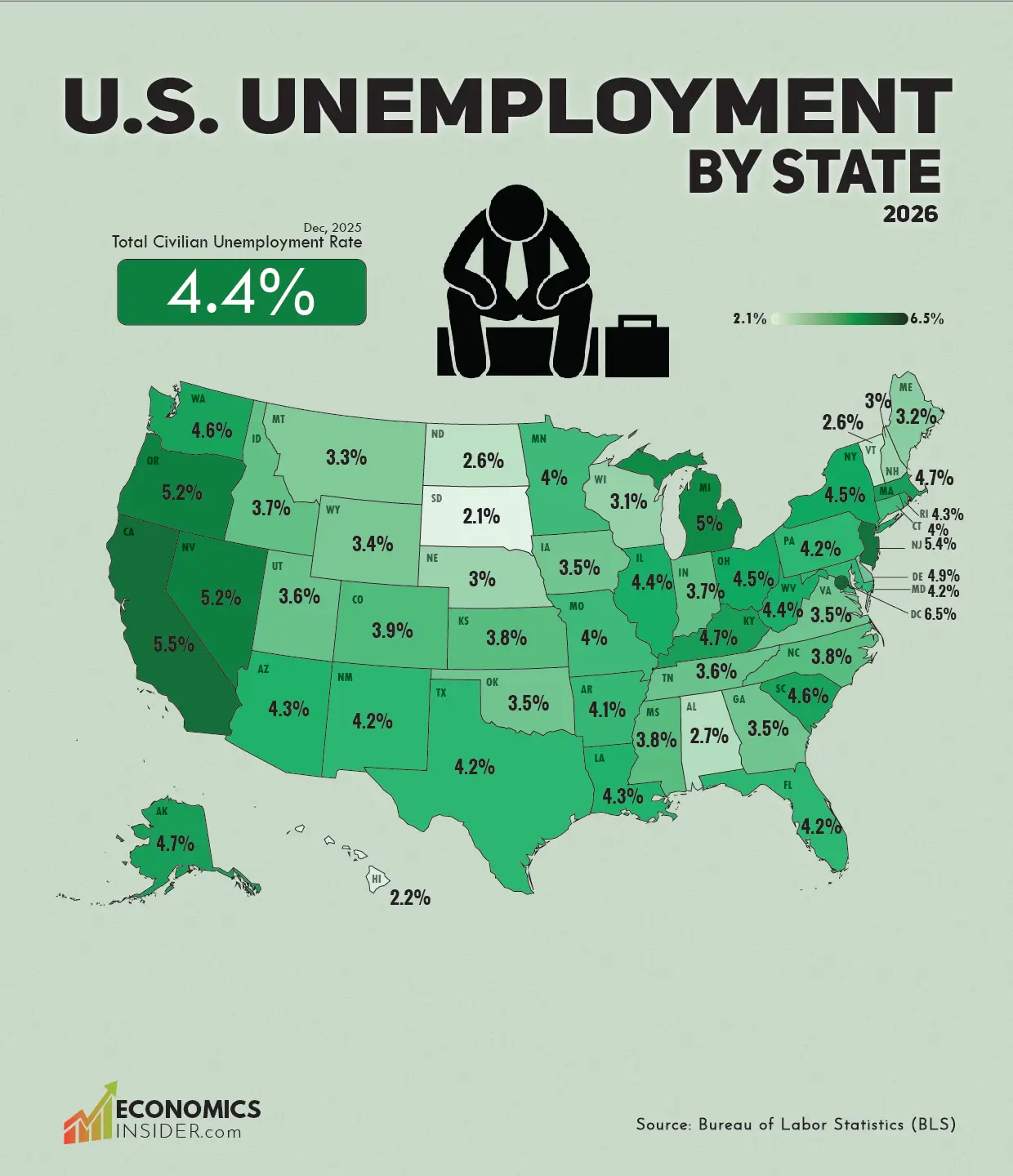
US Unemployment Rate 2026: What Happened in July?
Before discussing what the report could mean for the economy, it is important to understand what actually happened.
The July 2026 employment report contained several seemingly conflicting signals.
The headline number was a decline of 23,000 in nonfarm payroll employment. That was notable because employment had still been increasing, albeit slowly, in the preceding months.
But the unemployment rate moved in the opposite direction, declining from 4.2% in June to 4.1% in July.
That does not necessarily mean the labor market suddenly became stronger.
The unemployment rate is calculated using the labor force, which includes people who are employed and people who are unemployed but actively looking for work. Someone who stops looking for work is no longer counted as unemployed.
This distinction is extremely important when interpreting the US unemployment rate.
In July, the labor force declined by about 264,000, while the number of employed people fell by about 87,000 and the number of unemployed people fell by about 178,000. The participation rate also edged down to 61.4%.
In simple terms, the unemployment rate fell partly because the pool of people counted as unemployed became smaller.
That is why investors, economists and policymakers are likely to look beyond the 4.1% headline figure.
US Unemployment Rate 2026: The Main Numbers at a Glance
| Economic indicator | July 2026 result | What it suggests |
|---|---|---|
| US unemployment rate | 4.1% | Unemployment remains relatively low |
| Nonfarm payroll change | -23,000 | Employment growth weakened |
| Unemployed people | 6.9 million | Little overall monthly change |
| Labor-force participation | 61.4% | Labor supply remains an important issue |
| Employment-population ratio | 58.9% | Slightly lower than earlier in the year |
| Average hourly earnings | $37.62 | Wages increased 3.2% year over year |
| Health care employment | +22,000 | Continued source of job growth |
| Retail employment | -19,000 | Retail remains under pressure |
| Local government education | -50,000 | Significant monthly employment decline |
| May-June payroll revisions | -103,000 combined | Earlier labor-market strength was overstated |
The data show why the US unemployment rate 2026 cannot be interpreted in isolation.
The economy can have a low unemployment rate while simultaneously experiencing weaker hiring, slower labor-force growth and declining participation.
For readers who want to verify the underlying employment figures directly, the official US unemployment rate 2026 data from the Bureau of Labor Statistics provide the complete employment report and supporting tables. (Bureau of Labor Statistics)
US Unemployment Rate 2026: Why Did the Rate Fall When Jobs Were Lost?
This is probably the most confusing part of the latest report.
How can the unemployment rate fall when employers reported a net loss of 23,000 payroll jobs?
The key is that the unemployment rate and payroll employment come from different surveys.
The household survey is used to calculate unemployment and labor-force participation. The establishment survey, commonly called the payroll survey, measures employment, hours and earnings among businesses and government agencies.
The two surveys measure related but different things.
That means their monthly results do not always move in exactly the same direction.
There is another important factor.
A person must generally be actively looking for work to be classified as unemployed. If that person stops searching, perhaps because they believe suitable jobs are unavailable, that individual is no longer included among the unemployed even though they do not have a job.
In July, the number of people not in the labor force who said they wanted a job was approximately 5.9 million. The number of marginally attached workers was about 1.8 million, including approximately 476,000 discouraged workers.
This helps explain why a falling unemployment rate should not automatically be interpreted as a strengthening labor market.
US Unemployment Rate 2026 and Labor-Force Participation
The labor-force participation rate deserves special attention.
In July, it stood at 61.4%. That was little changed from June, but the rate had declined by 0.7 percentage point since January. The employment-population ratio also declined by 0.5 percentage point over that period.
This matters because the size of the labor force affects how the unemployment rate behaves.
Imagine 100 people are potentially available to work.
If 95 are working and five are actively searching for jobs, unemployment is 5%.
Now imagine two of those five job seekers stop looking for work. They are no longer counted as unemployed.
The number of unemployed people falls from five to three, but the economy has not necessarily created a single new job.
This is why economists examine several labor-market indicators together.
The unemployment rate is important, but so are:
- Labor-force participation
- Employment-population ratio
- Payroll employment
- Wage growth
- Hours worked
- Job vacancies
- Temporary layoffs
- Permanent job losses
- Long-term unemployment
- Labor-force entries and exits
Looking at these indicators together provides a much clearer picture of the US economy.
US Unemployment Rate 2026: What the Job Losses Tell Us About the Economy
The 23,000 payroll decline is not necessarily proof that the United States is entering a recession.
However, it is a signal worth watching.
The July report showed that employment declined in several areas, including local government education and retail trade. Health care continued to add jobs, although its pace slowed compared with the previous year.
Local government education employment fell by 50,000.
Retail trade employment declined by 19,000.
Financial activities employment fell by 14,000.
Meanwhile, health care added 22,000 jobs.
This creates an uneven picture rather than a simple collapse in employment.
Some industries are still hiring.
Others are cutting positions or experiencing slower demand.
That distinction matters because economic slowdowns rarely affect every industry at exactly the same time.
US Unemployment Rate 2026: Financial Services Show a Warning Sign
One particularly interesting part of the July data was financial activities employment.
Employment in financial activities declined by 14,000 in July, with losses in credit intermediation and related activities as well as insurance. The BLS reported that financial activities employment was down 121,000 from its recent peak in May 2025.
That does not automatically mean a financial crisis is developing.
However, financial employment can provide useful information about business conditions, lending activity and demand for financial services.
If businesses and consumers become more cautious, financial institutions may eventually see weaker demand for loans, investment services and other products.
This is one reason the labor-market report should be viewed alongside broader economic indicators.
US Unemployment Rate 2026: 7 Positive Ways It Could Affect Interest Rates, the Fed and the Economy
The word “positive” does not mean that job losses are positive.
Instead, the potential positive effects relate to what a cooling labor market could mean for inflation, monetary policy and financial conditions if the slowdown remains controlled rather than becoming a severe recession.
Here are seven important ways the latest labor-market situation could influence the economy.
US Unemployment Rate 2026: 1. A Cooling Labor Market Could Give the Fed More Policy Flexibility
The first potential effect concerns the Federal Reserve.
The Federal Reserve has a dual mandate: promoting maximum employment and stable prices.
That means policymakers cannot look only at inflation.
They also have to pay attention to employment conditions.
When the labor market is extremely strong and inflation is persistent, policymakers may have more reason to maintain restrictive monetary policy.
But when employment conditions weaken significantly, the employment side of the Fed’s mandate becomes more important.
The July 2026 report could therefore contribute to a debate about whether monetary policy is sufficiently restrictive.
However, this does not mean the Federal Reserve will automatically cut interest rates because payroll employment declined by 23,000.
The Fed considers a broad range of economic data.
Its July 29, 2026 decision kept the federal funds target range at 3.5% to 3.75%. The Federal Open Market Committee said economic activity was expanding at a solid pace, while also noting that inflation remained elevated relative to its 2% goal. (Federal Reserve)
That combination is important.
The labor market may be cooling, but inflation remains a major consideration.
For that reason, the Federal Reserve interest rates 2026 story is likely to remain highly dependent on both employment and inflation data.
The Fed itself explains that monetary policy works by influencing short-term interest rates and broader financial conditions, which then affect household and business decisions.
US Unemployment Rate 2026: 2. It Could Increase Expectations for Future Interest-Rate Cuts
The second possible effect is on market expectations.
Financial markets are forward-looking.
Investors do not wait for the Federal Reserve to announce every future decision before adjusting expectations. They continuously evaluate economic data and estimate what policymakers might do next.
A weaker labor market can increase expectations for lower interest rates if investors believe the Federal Reserve will eventually need to provide more support to economic activity.
This is where the relationship between the US unemployment rate and interest rates becomes especially important.
Generally speaking, a weakening labor market can increase the probability of monetary easing.
But the relationship is not automatic.
If unemployment rises while inflation remains stubbornly high, the Federal Reserve could face a difficult choice.
Cutting rates could support employment but potentially make inflation more difficult to control.
Keeping rates high could help restrain inflation but put additional pressure on employment and economic activity.
This is why the latest US unemployment rate 2026 figure should not be used as a standalone prediction of the next Fed decision.
Instead, investors will likely watch the combination of:
- Employment growth
- Unemployment
- Wage growth
- Inflation
- Consumer spending
- Business investment
- Job openings
- Productivity
- Financial conditions
The July report showed average hourly earnings at $37.62, with wages up 3.2% over the year
That wage-growth figure matters because wage pressure can influence inflation and consumer purchasing power.
US Unemployment Rate 2026: 3. Lower Interest Rates Could Eventually Reduce Borrowing Costs
The third potential effect is more personal.
Interest rates affect everyday financial decisions.
If the Federal Reserve eventually reduces short-term rates in response to a meaningful labor-market slowdown and easing inflation, borrowing conditions could become more favorable.
That could eventually affect:
- Credit cards
- Personal loans
- Business loans
- Auto financing
- Mortgages
- Corporate borrowing
- Investment decisions
However, there is an important distinction between the Federal Reserve’s policy rate and the interest rates consumers actually pay.
The Fed directly controls the federal funds target range, not mortgage rates or every consumer loan rate.
Long-term borrowing rates are influenced by factors such as inflation expectations, Treasury yields, credit risk, financial-market conditions and investor demand.
Therefore, even if the Federal Reserve cuts rates, consumers should not assume every borrowing rate will immediately fall by the same amount.
Still, a sustained shift toward lower policy rates can influence the broader financial environment.
This is one reason how unemployment affects interest rates is such an important topic for households and businesses.
US Unemployment Rate 2026: 4. Slower Hiring Could Help Reduce Inflation Pressure
This is one of the less obvious potential benefits of a cooling labor market.
A very strong economy can create intense competition for workers.
When employers struggle to find workers, they may raise wages to attract and retain employees.
Higher wages can be beneficial for workers, but if wage growth becomes significantly faster than productivity growth, businesses may attempt to protect profit margins by raising prices.
A cooling labor market can reduce some of that pressure.
The July 2026 data showed average hourly earnings rising 3.2% over the year. That was still positive wage growth, but it occurred alongside a much weaker employment picture
The important question is whether wage growth can remain healthy while inflation moves closer to the Federal Reserve’s target.
The Fed’s July 2026 Monetary Policy Report noted that inflation remained elevated relative to its 2% goal. It also described the labor market as broadly stable and highlighted slower labor-supply growth.
This creates a delicate balancing act.
The ideal outcome would not be a major rise in unemployment.
Instead, policymakers would prefer a labor market that cools enough to reduce inflation pressure without causing widespread joblessness.
That is what economists often mean when they discuss a “soft landing.”
US Unemployment Rate 2026: 5. It Could Support a More Balanced Economy
The fifth potential effect is a better balance between economic growth and inflation.
An economy does not need extremely rapid job creation forever to remain healthy.
If employment grows faster than the available workforce for a prolonged period, shortages can develop.
Businesses may compete aggressively for workers.
Wages can rise.
Consumers may have more disposable income.
Demand can become stronger.
In moderation, these developments are positive.
But if demand consistently exceeds the economy’s ability to produce goods and services, inflationary pressure can build.
A slower labor market can help bring demand into better balance.
The Federal Reserve’s July report said labor demand and supply had broadly moved into balance after a period of cooling.
That is an important distinction.
The objective is not necessarily to maximize employment growth every month.
The objective is to sustain strong employment while maintaining price stability.
This is central to understanding the relationship between the US unemployment rate and interest rates.
US Unemployment Rate 2026: 6. It Could Influence Consumer Spending
Employment and consumer spending are closely connected.
People who have jobs generally have income.
Income supports household spending on housing, food, transportation, entertainment, health care and other services.
When hiring slows, households can become more cautious.
People may delay large purchases.
They may increase savings.
They may pay down debt.
Businesses may also become more cautious if they expect consumers to reduce spending.
That can create a feedback loop.
Lower hiring can reduce income growth.
Lower income growth can reduce spending.
Reduced spending can weaken business revenue.
Weaker business revenue can lead to slower hiring.
This is why economists pay close attention to whether a labor-market slowdown is orderly or self-reinforcing.
The current data do not establish that the U.S. economy has entered such a negative cycle.
In fact, the BLS report showed continued employment growth in health care and little change across several other major industries.
Still, consumer spending will be one of the key areas to monitor in the months ahead.
US Unemployment Rate 2026: 7. It Could Change Business Investment and Hiring Decisions
The seventh potential effect concerns businesses.
Companies make investment decisions based partly on their expectations for future demand, borrowing costs and profitability.
When interest rates are high, financing expansion can become more expensive.
When demand is uncertain, businesses may delay hiring or capital investment.
A combination of weaker employment growth and high borrowing costs can therefore make companies more cautious.
On the other hand, if inflation falls and the Federal Reserve eventually lowers rates, businesses could gain more room to invest.
Lower financing costs can make certain projects more attractive.
Businesses may then consider:
- Expanding facilities
- Buying equipment
- Hiring workers
- Developing new products
- Increasing technology investment
- Refinancing debt
- Expanding inventories
This is why the Federal Reserve interest rates 2026 outlook matters far beyond Wall Street.
Monetary policy eventually reaches the real economy through households, businesses, lenders and investors.
US Unemployment Rate 2026: Why the Latest Report Does Not Automatically Mean Recession
One of the easiest mistakes to make when reading a weak jobs report is to immediately declare that a recession has arrived.
That conclusion would be premature.
A recession is not defined by one monthly employment report.
Economic downturns involve broader and more persistent weakness across economic activity.
A serious recession would generally involve significant declines in areas such as production, employment, income and spending.
The July report contains warning signs, but it also contains areas of resilience.
Health care continued to add jobs.
Several industries were little changed.
The unemployment rate remained relatively low.
Average hourly earnings continued to rise.
The number of long-term unemployed people declined slightly in July.
Therefore, the better interpretation is that the labor market appears to be cooling and deserves close monitoring, rather than that the report proves the economy is entering a recession.
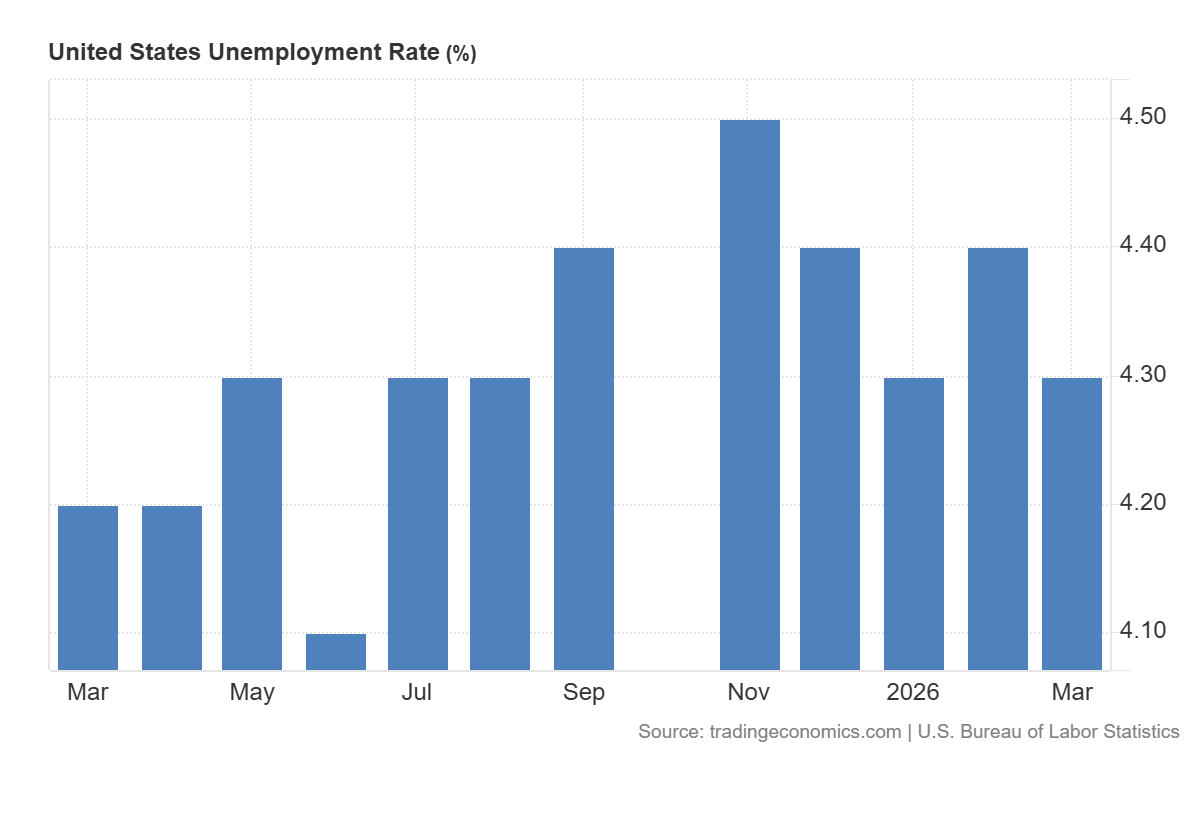
US Unemployment Rate 2026: What the 103,000 Job Revisions Really Mean
The revisions to previous employment reports may actually be one of the most important parts of the latest release.
May’s payroll increase was revised from 129,000 to 63,000.
June’s increase was revised from 57,000 to 20,000.
Together, those revisions reduced previously reported employment gains by 103,000 jobs. (Bureau of Labor Statistics)
Why does this matter?
Economic data are not always final when they are first released.
Initial employment estimates are based on information available at the time. As more businesses report their payroll information, the estimates can be revised.
This means investors and economists should avoid treating every initial number as permanent.
The revisions suggest that the labor market was weaker in May and June than earlier estimates indicated.
That makes the July decline more meaningful.
It also demonstrates why looking at a multi-month trend is often better than focusing on a single number.
US Unemployment Rate 2026: Which Industries Are Losing Jobs?
The industry breakdown provides another layer of information.
US Unemployment Rate 2026 and Local Government Education
Local government education employment declined by 50,000 in July.
This was one of the largest monthly declines in the report.
Because employment data can be affected by seasonal patterns, timing and administrative factors, one month’s movement should not automatically be interpreted as a structural collapse in education employment.
Still, the decline contributed substantially to the overall payroll loss.
US Unemployment Rate 2026 and Retail Employment
Retail trade lost 19,000 jobs in July.
Employment fell particularly in general merchandise retailers and gasoline stations and fuel dealers.
Retail is an important sector to monitor because it is closely connected to consumer demand.
If retail employment continues to weaken over several months, it could provide additional evidence that households are becoming more cautious.
US Unemployment Rate 2026 and Health Care Jobs
Health care continued to be a bright spot.
The sector added 22,000 jobs in July.
However, the pace was slower than its average monthly gain over the previous 12 months.
This suggests that even sectors that are still growing may be experiencing some moderation.
That is another reason the overall labor market should be viewed as cooling rather than collapsing.
US Unemployment Rate 2026: What It Means for Workers
For ordinary workers, economic statistics can sometimes feel distant.
But the unemployment rate affects real-life decisions.
A cooling labor market can influence how easy it is to find a new job, negotiate a salary or change careers.
When employers are competing aggressively for workers, employees may have more bargaining power.
When hiring slows, workers may become more cautious about leaving stable employment.
That can affect:
- Salary negotiations
- Career changes
- Relocation decisions
- Education choices
- Household budgets
- Major purchases
- Retirement planning
The latest report does not suggest that every worker should panic.
However, it does suggest that workers should pay attention to conditions in their particular industries.
The national unemployment rate is an average.
A 4.1% national unemployment rate does not mean every occupation or region has a 4.1% unemployment rate.
Some sectors may be expanding while others contract.
For example, the July report showed health care continuing to add jobs while retail and financial activities declined. (Bureau of Labor Statistics)
US Unemployment Rate 2026: What It Means for Borrowers
Borrowers should also pay attention to the interaction between employment, inflation and monetary policy.
When the Federal Reserve maintains higher interest rates, borrowing can remain relatively expensive.
That can affect people with:
- Variable-rate debt
- Credit-card balances
- New mortgages
- Business loans
- Auto loans
- Personal loans
If the Federal Reserve eventually lowers rates, some borrowing costs may decline.
But consumers should avoid assuming that a single jobs report guarantees lower rates.
The Fed’s July decision demonstrated why.
Despite the cooling labor market, policymakers kept the federal funds target range at 3.5% to 3.75%, citing continued economic expansion and inflation that remained above the 2% objective.
The message is clear: employment matters, but inflation matters too.
US Unemployment Rate 2026: What It Means for Savers and Investors
Higher interest rates can benefit some savers because certain savings products and fixed-income investments may offer higher yields.
But higher rates can also create pressure elsewhere in financial markets.
When rates are elevated, investors may reassess the attractiveness of:
- Bonds
- Stocks
- Real estate
- Cash
- Certificates of deposit
- Other fixed-income products
A weaker labor market could eventually increase expectations of lower rates.
That can change the relative attractiveness of different asset classes.
However, investing decisions should not be based on one employment report.
Markets respond to expectations, and expectations can change quickly.
A falling unemployment rate could be interpreted as positive for the economy.
A payroll decline could be interpreted as negative.
But if investors believe weaker employment increases the likelihood of future rate cuts, the same report could produce a complicated market reaction.
That is the fascinating part of economic data.
The headline is rarely the entire story.
US Unemployment Rate 2026: How Unemployment Affects Interest Rates
So, how exactly does unemployment affect interest rates?
The relationship can be explained through the Federal Reserve’s dual mandate.
When employment is strong and inflation is rising, the Fed may maintain or increase interest rates to prevent the economy from overheating.
Higher interest rates make borrowing more expensive.
That can reduce demand.
Lower demand can eventually reduce inflationary pressure.
When unemployment rises significantly and inflation is under control, the Federal Reserve may have more room to lower rates to support economic activity.
Lower rates can encourage borrowing and investment.
That can help support demand and employment.
The process does not happen instantly.
Monetary policy operates with lags.
A rate decision made today can take time to affect households, businesses, hiring and prices.
The Federal Reserve itself emphasizes that monetary-policy actions influence economic activity, employment and prices with a lag.
This is why the Fed does not simply respond mechanically to every monthly unemployment figure.
Instead, policymakers assess where the economy appears to be heading.
US Unemployment Rate 2026: Why Inflation Could Complicate the Fed’s Next Move
The biggest obstacle to assuming that weaker employment will immediately produce lower interest rates is inflation.
The Federal Reserve’s long-run inflation objective is 2%, measured by the annual change in the price index for personal consumption expenditures.
The July 2026 Monetary Policy Report said inflation had risen and remained elevated relative to the Fed’s 2% objective. It also noted that energy-related supply shocks had contributed to price increases.
This creates a difficult situation.
Imagine unemployment rises.
That would normally make a stronger case for lower interest rates.
But suppose inflation also remains high.
The Fed then has to balance two competing concerns.
Cutting rates could support employment.
Keeping rates high could help restrain inflation.
This is why the Federal Reserve interest rates 2026 outlook cannot be determined from the unemployment rate alone.
The direction of inflation will be crucial.
US Unemployment Rate 2026: Could the Fed Cut Rates Soon?
It is tempting to turn the latest report into a prediction.
But responsible economic analysis requires caution.
The July 2026 jobs report increases the importance of labor-market conditions in the Fed’s policy debate, but it does not guarantee a rate cut.
At its July 29 meeting, the FOMC maintained the federal funds target range at 3.5% to 3.75%. The decision passed by a 9–3 vote, with three members preferring a quarter-point increas
That voting pattern is particularly interesting because it shows that policymakers did not have a completely uniform view of the appropriate policy stance.
The Fed’s next decisions will depend on incoming economic information.
Among the most important data to watch are:
- The next employment report
- Inflation readings
- Wage growth
- Consumer spending
- Economic growth
- Job openings
- Initial unemployment claims
- Business investment
- Financial conditions
The next Employment Situation report for August 2026 is scheduled for September 4, 2026.
That report could provide an important test of whether July’s weakness was temporary or part of a broader trend.
US Unemployment Rate 2026: The Difference Between a Slowdown and a Recession
This distinction deserves emphasis.
A slowdown means economic activity is growing more slowly.
A recession means the economy is experiencing a broad and significant contraction.
The United States can experience weaker hiring without entering a recession.
In fact, a moderate slowdown may be exactly what policymakers want if inflation is too high.
The ideal scenario would be something like this:
- Hiring slows gradually.
- Unemployment remains relatively contained.
- Wage growth moderates without collapsing.
- Inflation continues moving lower.
- Consumer spending remains resilient.
- Business investment remains positive.
- The Federal Reserve gains more flexibility.
- Interest rates eventually move toward a less restrictive level.
That would be a relatively constructive outcome.
The danger would be a different scenario:
- Hiring declines sharply.
- Unemployment rises rapidly.
- Consumer spending weakens.
- Business investment falls.
- Corporate layoffs increase.
- Credit conditions tighten.
- Economic growth contracts.
- Inflation remains stubbornly high.
That would be much more difficult for policymakers.
The July data do not establish that the second scenario is happening.
US Unemployment Rate 2026: What Investors Should Watch Next
Investors trying to understand the direction of the US economy should avoid focusing exclusively on the headline unemployment rate.
Instead, watch the trend.
US Unemployment Rate 2026 Indicator #1: Payroll Growth
If payroll employment continues declining or remains extremely weak for several months, concerns about economic growth could increase.
US Unemployment Rate 2026 Indicator #2: Participation
If the labor-force participation rate continues falling, the unemployment rate could become less informative by itself.
A declining participation rate can make unemployment appear lower even when fewer people are working.
US Unemployment Rate 2026 Indicator #3: Wage Growth
Wage growth matters for both workers and inflation.
Healthy wage growth can support consumer spending.
But very rapid wage growth could make inflation harder to control.
US Unemployment Rate 2026 Indicator #4: Long-Term Unemployment
Long-term unemployment can provide a clearer picture of whether people are struggling to find work for extended periods.
In July, about 1.8 million unemployed people had been jobless for at least 27 weeks, representing 25.5% of all unemployed people.
US Unemployment Rate 2026 Indicator #5: Temporary Layoffs
Temporary layoffs rose by 153,000 in July to 921,000.
That increase deserves attention because it can provide information about the nature of employment disruptions.

US Unemployment Rate 2026: What Could Happen Through the Rest of 2026?
There are several possible paths.
US Unemployment Rate 2026 Scenario One: A Controlled Cooling
This would be the most optimistic scenario.
Employment growth remains weak but does not collapse.
Unemployment edges higher gradually.
Inflation continues to moderate.
The Federal Reserve gains more room to adjust interest rates.
Consumer spending remains relatively healthy.
In this scenario, the U.S. could achieve something close to a soft landing.
US Unemployment Rate 2026 Scenario Two: Labor Market Stabilization
Another possibility is that July’s weakness proves temporary.
Hiring could recover in subsequent months.
The unemployment rate could remain around current levels.
Inflation could gradually improve.
The Fed could maintain its current policy stance while waiting for clearer evidence.
This scenario would mean that the July report was a warning rather than the beginning of a major downturn.
US Unemployment Rate 2026 Scenario Three: A Deeper Labor-Market Slowdown
The more concerning possibility is that payroll declines continue.
If employment losses become widespread, unemployment could rise.
Consumer spending could weaken.
Businesses could reduce investment.
The Federal Reserve might then face stronger pressure to lower interest rates if inflation permits.
This scenario would have more serious consequences for the US economy.
At present, one report is not enough to determine which scenario will occur.
US Unemployment Rate 2026: Why the 4.1% Number Should Not Be Misunderstood
The phrase “unemployment rate falls” can sound automatically positive.
But economic statistics require context.
The unemployment rate fell from 4.2% to 4.1% in July.
At the same time:
- Payroll employment declined by 23,000.
- The labor force declined.
- Labor-force participation edged down.
- The employment-population ratio fell slightly.
- Previous payroll estimates were revised lower.
That combination makes the report more nuanced.
The 4.1% figure is not bad news by itself.
It simply does not tell the entire story.
This is a valuable lesson for anyone following financial news: never interpret one economic indicator without looking at the indicators surrounding it.
US Unemployment Rate 2026: What It Means for the Average American
For households, the biggest question is simple:
What does all of this mean for me?
If you are employed, the most important thing may be the strength of your industry rather than the national unemployment rate.
If you are looking for work, the hiring environment matters more directly.
If you have a mortgage or other debt, interest-rate expectations matter.
If you are saving money, the interest-rate environment affects the return available on certain savings products.
If you own a business, employment conditions influence both labor costs and consumer demand.
If you invest, the relationship between employment, inflation and Federal Reserve policy can influence financial markets.
In other words, the US unemployment rate 2026 is not merely a statistic for economists.
It can eventually affect everyday financial decisions.
US Unemployment Rate 2026: The Bigger Economic Picture
The most important takeaway from the July 2026 employment report is that the U.S. labor market appears to be losing momentum, but the evidence does not yet point conclusively to a recession.
The unemployment rate is still relatively low at 4.1%.
However, payroll employment fell by 23,000, earlier job gains were revised lower, participation has declined since January, and several industries are showing weakness.
At the same time, health care continues to create jobs, wages are still increasing and several major industries were relatively stable.
This mixture of weakness and resilience is precisely why the next few employment reports will matter.
The Federal Reserve is watching the same economy from a different angle.
Its job is to balance maximum employment with price stability.
As of its July 29 meeting, the Fed maintained the federal funds target range at 3.5% to 3.75%, while noting both solid economic activity and inflation that remained above its 2% objective. (Federal Reserve)
That means the path for interest rates remains uncertain.
A weaker labor market could eventually increase the case for lower rates.
Persistent inflation could argue for keeping rates higher.
The interaction between those two forces will shape monetary policy.
Final Takeaway
The latest US unemployment rate 2026 data tell a story that is more complicated—and more interesting—than the headline suggests.
The unemployment rate fell to 4.1%, but the U.S. economy also lost 23,000 payroll jobs in July.
That does not mean the economy is collapsing.
It also does not mean everything is perfectly healthy.
Instead, the report suggests that the labor market is cooling and that policymakers, investors, businesses and households have good reason to pay closer attention to what happens next.
The potential positive side is that a controlled slowdown could reduce inflation pressure, give the Federal Reserve greater flexibility and eventually create conditions for lower interest rates.
But the outcome depends heavily on whether employment weakness remains moderate or becomes widespread.
The most important relationship to watch is therefore not simply the US unemployment rate and interest rates.
It is the relationship among employment, inflation, Federal Reserve policy, consumer spending and economic growth.
If unemployment remains relatively low, inflation continues to ease and hiring stabilizes, the U.S. could navigate this period successfully.
If unemployment rises sharply while inflation remains stubbornly elevated, policymakers could face a much more difficult choice.
For now, the July report is best viewed as a warning signal rather than a recession verdict.
The next few months should tell us whether the 23,000-job decline was an isolated setback or part of a broader labor-market slowdown.
And that distinction could determine the next major chapter for interest rates, Federal Reserve policy and the US economy.
Frequently Asked Questions
US Unemployment Rate 2026: What is the current unemployment rate?
The U.S. unemployment rate was 4.1% in July 2026, according to the Bureau of Labor Statistics. The rate was down from 4.2% in June.
US Unemployment Rate 2026: Did the US economy lose jobs in July?
Yes. Nonfarm payroll employment declined by 23,000 jobs in July 2026. Employment losses were concentrated in areas including local government education and retail trade, while health care continued to add jobs. (Bureau of Labor Statistics)
US Unemployment Rate 2026: Why did unemployment fall if jobs were lost?
The unemployment rate is based on the labor force, not simply the number of payroll jobs. The labor force declined in July, and people who are not actively seeking work are not counted as unemployed. This means the unemployment rate can fall even while payroll employment declines.
US Unemployment Rate 2026: Will the Federal Reserve cut interest rates?
The July jobs report could influence expectations for future monetary policy, but it does not guarantee a rate cut. The Federal Reserve maintained its federal funds target range at 3.5% to 3.75% at its July 29, 2026 meeting. (Federal Reserve)
US Unemployment Rate 2026: How does unemployment affect interest rates?
A significant rise in unemployment can increase pressure on the Federal Reserve to support economic activity, particularly when inflation is under control. However, the Fed also considers inflation, economic growth, wages and financial conditions before changing interest rates.
US Unemployment Rate 2026: Does a lower unemployment rate mean the economy is stronger?
Not necessarily. A lower unemployment rate is generally positive, but it must be considered alongside labor-force participation, employment growth and other labor-market indicators.
US Unemployment Rate 2026: Does the latest report mean the US is in a recession?
No. One weak monthly jobs report does not establish that the economy is in a recession. The broader economic trend must be assessed across multiple indicators and over time.
US Unemployment Rate 2026: What should people watch next?
The most important indicators include payroll employment, unemployment, labor-force participation, wage growth, inflation, consumer spending, job openings and Federal Reserve policy decisions.